
 The common “Victory” gesture is well known to us all. Habitually, we interpret the signal as one of strength and impending or realized victory.
There have been times in history where the victory sign, made by showing the first and second fingers in the shape of the letter “V,” had a different meaning. It is important to know when you are dealing with the common gesture versus some more esoteric flavor.
For example, the familiar usage to indicate victory is normally made with the palm of the person making the gesture facing toward the viewer. When the palm is facing toward the person making the gesture, it can have a completely different meaning. When coupled by an upward jerking motion of the forearm, it means “up yours.”
In Sports
We see the Victory sign made by athletes in every facit of the sports world. It is normally directed at someone out of earshot, and it simply means “we won.” It can also be shown before the contest, and in that case it means “we are going to win.”
In Politics
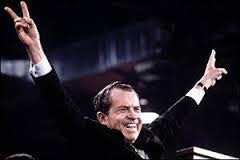 Who can forget how Nixon frequently used the Double V with both arms outstretched. He even used it as he was boarding his helicopter immediately after he resigned from the presidency.
In War
The victory sign has historically been used when one side has won a battle. Who can forget the US souldiers riding through Europe flashing the victory sign at the end of WWII. Similarly, we recall Winston Churchill showing the vistory sign as a way to instill confidence within the people of England that they would ultimately prevail. His famous admonition given at the time was “Never, never, never, quit.”
In Klingon
Of course, there have been variations on the victory sign, like the one on Star Trek when Mr. Spock would show the “Vulcan Salute” with four fingers split two on each side of the letter “V.”
The meaning of that gesture was very different from the single victory sign. It meant “Live Long and Prosper.” One interesting thing about that gesture is that it can be hard for some people to make it. I believe that is why Sheldon Cooper on “The Big Bang Theory” was so prone to use the gesture. It made him feel superior, because not everyone could do it. Can you?
In School
School children, and even adults often will use the victory gesture to signal another person across the room that they just aced a test.
Upside Down V
This gesture is not used a lot, but when you see it, the normal connotation is that our team was successful at snatching defeat from the jaws of victory. There is no pride in this gesture at all.
It also has the negative connotation, because you have to make the gesture with your palm facing yourself. It is very uncomfortable to make the upside down “V” sign with your palm facing away from you. If you doubt that, try it now yourself.
The simple hand gesture of forming a letter “V” with two fingers is one of the most common forms of body language. Curiously, this gesture, unlike many others, is not highly susceptible to misinterpretation when going form one culture to another. You can use the signal often and anywhere, and rarely will you be misunderstood. In some parts of the world, the gesture is used a lot more than others.
For example, in Japan the gesture is used by young people who are being photographed. The gesture even has a name in Japanese: they call it “pisu sain.”
Go ahead and use this gesture freely, but just make sure your palm is toward the observer rather than toward yourself.